Friday, March 18, 2005

Straight from South Park, Colorado...


Straight from South Park, Colorado, it's the unofficial official mascot of The House of Boogie...meet "Little Boogie."

Thursday, March 17, 2005

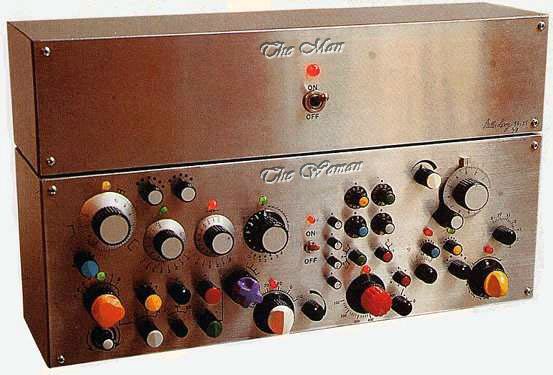
The Man & The Woman*


*Today's my birthday so I can get away with this...


Understanding What Women Say

Yes = No
No = Yes
Maybe = No
I'm sorry = You'll be sorry
We need = I want
It's your decision = The correct decision should be obvious by now
Do what you want = You'll pay for this later
We need to talk = I need to complain
Sure, go ahead = I don't want you to go
I'm not upset = Of course I'm upset, you moron
You're so manly = You need to shave and you sweat a lot
This kitchen is so inconvenient = I want a new house
I want new curtains = and carpeting, and furniture, and wallpaper
I heard a noise = I noticed you were almost asleep
Do you love me? = I'm going to ask for something expensive
How much do you love me? = I did something today that will piss you off
I'll be ready in a minute = Kick off your shoes and find a good game on TV
You have to learn to communicate = Just agree with me
Are you listening to me? = [Too late, you're dead]

* * *

Understanding What Men Say

I'm hungry = I'm hungry
I'm sleepy = I'm sleepy
I'm tired = I'm tired
Do you want to go to a movie? = I'd eventually like to have sex with you
Can I take you to dinner? = I'd eventually like to have sex with you
Can I call you sometime? = I'd eventually like to have sex with you
May I have this dance? = I'd eventually like to have sex with you
Nice dress! = Nice cleavage!
You look tense, let me give you a massage = I want to fondle you
What's wrong? = What stupid self-inflicted psychological trauma is it now?
I'm bored = Do you want to have sex?
I love you = Let's have sex now
I love you, too = OK, I said it. Now can we have sex?
Yes, I like the way you cut your hair = I liked it better before
Let's talk = I'll impress you by showing you I'm a deep guy, then maybe sex?
Will you marry me? = I want to make it illegal for you to have sex with others.
I don't think that blouse and that skirt go well together = I'm gay

The Gates


Us visiting The Gates on 2/21, the day after a fresh (and cold) storm in NYC.

Wednesday, March 16, 2005

The Tithes That Bind (aka Fearing The Golden Arches over Congress)

Freedom.

This nation was founded on the premise of not solely escaping oppression by a king or his laws, but also on individual choice being of greater significance than simply to serve a king and his feudal, royal heritage. It's Hobbes and Locke and Tocqueville and a bunch of other guys who wore funny wigs, essentially.

While The United States of America was created and borne out of distaste for the rule of a monarch, there was a need for the rule of law, so the new land -- a nation -- was composed of states that functioned much on their own but within the confines, when necessary, of the states united. It is this theme of laws to protect and guide The People, when necessary, and when merited, that I carry with me and -- unfortunately -- brought with me as I ventured forth into McDonald’s on 57th and 6th.

Okay...I actually ventured forth because the trains in NYC were completely out of whack -- the 6 was screwed and the anticipated fall-out guaranteed the other trains were filled with a bunch of unhappy, smellier-than-normal passengers. Noooooo thanks...so I wound up on an F train that dumped me at 57th and 6th in front of the Golden Arches.

Yeah, I know…how the hell does McDonald’s and the birth of our nation have anything in common?

I recently watched “Super Size Me,” the documentary of a man who decided to conduct an experiment to determine whether McDonald’s food (in his case, 30 days of nothing but food purchased from McDonald’s) was healthy, unhealthy, safe, or, in fact, dangerous. Essentially, he gained 25 pounds, damaged his liver (not permanently), reduced his body’s ability to oxygenate his blood, and became lazy, tired, moody, anxious and depressed. That – in a nutshell – was his experience from a 30-day McDonald’s diet.

Clearly, his point in making the film, as evidenced in part by various interviews with the pro- and anti-McDonald’s parties, was to show that not only was McDonald’s duping the public by dumping a lot of sugar, caffeine and other addictive properties in its food, but it was contributing to the national trend towards obesity, not only in America but in other nations that also have a significant number of McDonald’s restaurants, ie France, England, Italy, etc. He suggested that McDonald’s intentionally hides their food’s nutritional values and that no one would easily be able to obtain pamphlets or nutritional information. In addition, his experiment revealed that many (read: 95%) nutritionists suggest that eating fast food – at all – should be avoided.

Where am I going with this? Good question. Essentially, I’ve watched a variety of interesting (and appalling) trends occur over the last decade: people have sued McDonald’s for preparing coffee that is too hot after being scalded by same; people have sued the tobacco industry for their declining health, whether it is cancer, emphysema or cardiac-related problems; and people have sued the gun industry for manufacturing products which are responsible or a direct cause of death. And in the case of “Super Size Me,” the film's experiment was predicated on the notion that two teenagers sued McDonald’s for making them obese, but their case was dismissed because the judge felt the teens did not demonstrate eating McDonald’s food caused their obesity.

In a litigious, blame-rather-than-fix-the-problem society, the case in which an individual sued McDonald’s after being scalded by too-hot coffee was eventually settled, but the result, other than a payoff for very creative litigants, was McDonald’s lowered the temperature of its coffee and also made sure to include a warning on each cup in which it’s served. That’s disturbing.

Suing the tobacco industry for hiding the dangers of smoking is appropriate, but if I were a judge in any of those particular cases, I would ask one simple question of each of the plaintiffs bringing action against a tobacco company or entity: “Once you realized that smoking was dangerous, did you stop smoking that very day?” The answer is no in most likely all cases, and my reasoning behind that assumption, of course, is that these are not cases in which an individual is wronged by another party; these are cases in which an individual sees a way to capitalize on public trends and/or moods, coupled with a disturbingly worrisome trend, which is the judiciary being used to exact penalties for past misdeeds. Should tobacco companies be punished for lying to consumers for so many years? Absolutely. Are tobacco companies to blame for using icons like Joe Camel and the like to attract kids and adolescents? For sure. Whether or not the surgeon general suggested that smoking was unhealthy, wasn’t it relatively obvious that smoking is a dangerous, unhealthy habit? Sort of.

We live in a time when smoking is vilified and frowned upon; in fact, there are people who are vehemently against smoking tobacco but have no problem using marijuana. The problem is that for 80% or more of the citizens of this country, the dangers of smoking are as well-known as President Clinton's proclivity to cheap sex with loose women. The point is: we've been inundated with anti-smoking rhetoric from when (hopefully) we were children, so the dangers of smoking have been one built and branded into our collective conscience. Punishing the tobacco companies for lying to consumers isn't as pernicious or alarming as the other trends in judicial righting of "wrongs." And people suing McDonald's for causing their obesity is, in a word, sickening.

Even if we throw common sense out the window and are completely unaware of the dangers of smoking, it's pretty clear that inhaling the by-products of whatever crap they roll into cigarettes these days is not "healthy." But for all but the most low-functioning of human beings, how can eating regularly at McDonald's be considered to be anything but unhealthy? The bulk of their food is fried, breaded, salted and/or sugared, and even their salads have enough crap installed therein to be considered unhealthy. Based on Super Size Me, a typical "McShaker" salad has more calories than a Big Mac. Oops. So, how can anyone, after enjoying three meals a day at Mickey D's, be surprised when they're in need of larger clothes, additional doctor visits and lots of new prescriptions and medical testing?

The concern here isn't whether or not McDonald's is unhealthy or dangerous or the like: it's fairly obvious. And that's the point -- their food is unhealthy. But they're not forcing anyone to consume it. The day Ronald McDonald slips out of a dark alley and, at gunpoint, forces me to eat a Fillet-O-Fish is the day I put two nine-millemeter calling cards between the clown's eyes. But until then, it's my option to ingest the carboard-encased crap they're selling; whether it's McDonald's, Burger King, Wendy's, Jack-In-The-Box or Kentucky Fried Chicken, the option is mine to either buy or to go elsewhere. So for anyone to actually have the creativity to sue a fast-food company for causing their obesity is beyond ridiculous. At least it is in my opinion...if you don't agree, go get your own blog ;-)

Now here's where it gets tricky...if the judicial system is going to consent to be used to implement punishment for "past misdeeds" (ie hiding content, misleading consumers in order to get them "hooked" on a product, etc.) -- whether it's fast food or tobacco -- shouldn't we next expect laws to be enacted to prevent this sort of thing? I actually do expect this to happen: it did with the tobacco industry, and the penalties are reaching into the billions. States have been given free reign by the federal government to charge several dollars on each pack of cigarettes sold in their jurisdiction; this "penalty" amounts to more per pack than the tobacco companies, in some cases, would normally charge for the product in the first place. These so-called "sin" taxes are fine with me; what isn't, however, is the notion or the very likely possibility that the next wave of these taxes will apply to things like liquor and food.

Imagine the next time you go to a bar and, upon ordering a grey goose and tonic, being asked to sign an affidavit acknowledging vodka is unhealthy and can cause liver disease. Or when you next visit a fast food establishment, being asked to sign an affidavit indicating that red meat (or whatever type of material they're marketing thereas) is unhealthy, french fries contain sodium and soda has a number of harmful chemicals, including caffeine and sugar, therein. It sounds ridiculous, but if the government deems it appropriate to put warning labels on music, cigarettes and air-bag equipped cars, why not vodka and McWhoppers?

Morgan Spurlock, the individual behind Super Size Me, set out to suggest -- at least from my interpretation thereof -- that McDonald's was guilty of tricking consumers (by hiding nutrition info, stuffing addictive chemicals into its food, and for upsizing its products) into eating more and more and more. I'm not sure if they're "tricking" people into doing so; it's not like Carmen or Stephan are standing near the cashier whispering "Hey buddy, wanna super-size that?" I am a firm believer in the government operating under the laissez-faire principle, meaning the less government involvement, the better, whether that means the judiciary, the legislature, or an executive order telling McDonald's to stop putting so much damn dark meat in their McChickenStuff.

I liken this anticipated governmental meddling to the seat belt law. Why should the federal government, or any state government, require me by law to wear a seat belt? Provided I am driving safely, am not breaking any laws and not endangering other drivers, why should I otherwise be pulled over by a police officer and be fined for not wearing a seat belt?

Many of you reading this long-winded diatribe will rightly respond to the question above by saying that seat belts save lives, and the state is trying to protect its inhabitants. And to that, I say bullshit -- with a capital B, as in Boogie. Each state is funding and creating revenue for their local and state police units as a result of seat belt laws; but government isn't and shouldn't be paternal in its attempt to protect the populace, regardless if it's a town, city, state or the Fed itself. Each state is mandated -- required to and limited to pass laws to protect the general welfare without impinging on the rights of the individual. Wearing a seat belt isn't that much of an infringement, but why should the state be able to tell me that I need to wear a seat belt and fine me if I don't? Same goes for wearing a motorcyle helmet. Are they concerned that, if I don't wear a seat belt, that, upon involving myself in a high-speed accident, my body will somehow injure another motorist (or passing pedestrian) as it flies through the windshield and the air? My head is not hard enough (despite this post as evidence to the contrary) that it would injure anyone should I be ejected from a speeding motorcyle seat. So where is the line between the state's right to protect its citizens and my right to do whatever the hell I please so long as I don't injure anyone else?

And where is the state mandated to tell me I can't eat 7 whoppers, two McShakes, four Filet-O-Fishes and a bucket of fries? And wash it down with seventeen super-sized Jolt Colas? As of right this minute, they're not. And they shouldn't be. But if they can cross the line to tell me to wear a seatbelt and a motorcycle helmet, can't a cop fine me for eating too many french fries?

If the mentality that the government knows what's best for you -- and anyone who has two functioning lobes knows that's bullshit extraordinaire -- then along with the seat belt law, you should expect food- and alcohol-related restrictions to match the meddling they already have perpetrated via the seat belt and the tobacco laws. Imagine it: "Put down that fork, you fat fuck, or you're under arrest!" It would sound great, although I'd have a hard time spending $10 to watch Dirty Harry stake out a Denny's for an All-You-Can-Eat Buffet.

Limiting and tracking the number of guns sold (and, obviously, to whom) is certainly a right that should be given to the state; guns are dangerous (although it really depends on who is wielding the gun). But while plenty of people have died as a result of being overweight, and plenty have had hardening of the arteries and/or heart attacks as a result of poor eating habits, I don't recall the last time I read a news story where a bank was robbed by a man wielding a Big Mac with extra ketchup. One day, perhaps -- but not yet.

Obviously the state cannot and should not be meddling in these matters, just as it shouldn't be fining people for not wearing seatbelts. But as long as the judiciary takes these ridiculous, sans merit suits and lends them credence, and as long as people find a way to point fingers at anything or anyone -- for gun deaths, cigarette smoking, drinking too much, or eating fourteen pounds of KFC mashed potatoes -- we'll have a country that will spend more time pointing fingers at everything but ourselves. And get nowhere. We'll be shot, have emphysema, liver disease, and we'll be obese -- but we'll be rich.

I'm not begrudging Morgan's theory that McDonald's is unhealthy, duplicitous and not quite what it seems -- but in this day and age, I lean towards the notion of caveat emptor and employ common sense, rather than a watchdog or some other paternal intervention for where I eat, what I watch, what I drink and with whom I spend my time. I believe that expecting -- or, worse, embracing -- government involvement in every aspect of our lives, no matter what level and no matter how intimate (eg abortion, euthanasia, living wills) is a sure-fire recipe for us to forfeit our individuality, our identity, and our self-determination.

There's got to be a better way.

Tuesday, March 15, 2005

Survival

Today is it, the "final" deadline in the chain of the last several weeks. Having said that, I've got a shitload on my plate for tomorrow, so it's not as if tonight I can go to sleep and wake up refweshed and all weddy to wock.

Tomorrow's promise is more projects, both large and small, Thursday -- woohoo -- is my birthday and my other half in town -- and then Friday I am taking off to spend some quality time with her away from offices, phone calls, clients, and pressure. The weekend is an assortment of good stuff -- dinners and brunches with friends and family, and -- for the first time in a while -- a real celebration of much more than my birthday. We're celebrating mine, my sister's -- whose birthday sort of got skipped over (New Year's Day) due to my dad coming home -- and just the fact that my father might have lost a step or two but is otherwise 25% lighter and a lot better than he was.

My other half kept asking me what I wanted for my birthday, and while there are a thousand things I could wish for -- an iPod photo, an NAD DVD HDCD changer (still lusting after that after four or five years), a Loewe flat-screen plasma, a Bugatti Veyron (the real thing, no miniatures please) and the available Seinfeld DVD's -- but the truth is I really only want two things: the continued (improving) health of my father and to have my other half in NYC full-time. There was a time when the trifecta was a long way off -- my dad to be healthy, my family to be able to smile and be happy, and my other half and I to be together physically full-time. Slowly but surely, I've watched as those three things have come closer and closer to fruition. My father is doing wonderfully and I thank god for each day he's improving and able to smile; my family is once again back to enjoying being together rather than commiserating and worrying and simply passing time as he heals; and my other half and I inch closer, day by day, to being together every day and every night.

Some people might opt for the plasma, and Loewe makes some incredible stuff -- one day I hope to have $20k to blow on an HD and another $15k for a B&O/Mark Levinson/Krell system. I'd love to get the iPod photo so I can actually fit my entire collection on one device (60GB) but it's something for another day. The Bugatti Veyron is a V-12 monster that goes from 0-60 in under four seconds and hits over 215 mph, and it looks like an orgasm. And in the right hands, I am sure the operator thereof could attain same given some open asphalt and few pedestrians. At this point I'd actually settle for the new Lexus GS with all-wheel drive and a V8. But the truth is, unless I'm on the track, I don't really find myself lusting after automobiles anymore, in deference to enjoying the back seats of cabs and the subway with my other half.

But if someone tossed me the keys to a gunmetal Aston Vantage soft top, well, I'd be willing to take it for a ride.

Anyway...I guess what I'm circling around is that I've found the things in life that make me happier than I imagined; I'm not sure if it's maturity, the prospect of reaching 35, or the fact that emotionally I've been through a meat grinder in nearly all phases of my life this past year, or that work has been the equivalent of a colonoscopy with a cattle-prod. The bottom line is all I am really looking forward to, and all I really need, is time with the people I care about -- family, friends, and -- of course -- my other half; some down-time to catch my breath before the next wave of pressure engulfs me for weeks or months at a time; and for my father to be healthy, happy and smiling.

And if anyone happens to have Heidi Klum's contact info, pass it my way: boogie@limegreenjello.com.

Thanks... ;-)

Monday, March 14, 2005

Right vs. Wrong and The Thin Red Line

From the Atlanta courthouse incident the other day to the bizarre, tragic shooting in a Church in Wisconsin by Terry Ratzmann, 44, who killed seven before killing himself, to the recent disclosure that two NYPD veteran officers were convicted of serving as de-facto mafia hitmen since the late 1980's, there is plenty in the news with which to lead one to question where the human race is headed. In fact, based on these types of news items, the more apt question is can normal people bearing witness to the moral decay surrounding us make a difference. It's not quite a forty days and forty nights-type of problem, and it's not an epic, biblical Sodom and Gomorrah we confront, but reading the news makes me wonder if (and hope) there's a limit to the evil that men can do to one another.

In the meantime, however, there's sports.

Well, there is sports -- sort of. There's no hockey, although the players' representatives agreed to meet the owners' representatives, so there's "dialogue" -- except it seems that said dialogue is really cosmetic. There's next-to no incentive for the players to capitulate because, since there's no hockey season (on this continent, anyway) they're not getting paid to play, so to "cave" now would make no sense. There is a draft coming in June, however, so the clock that stopped running on or around February 19th is now back to ticking, and it's rumored that if there can't be some sort of deal hammered out a few weeks prior to the NHL Entry Draft, the owners will begin drafting "replacement" players, ie players that are a) not members of the NHL Players Association and, b) therefore, willing to abide by any sort of new/temporary Collective Bargaining Agreement the league enacts to address the newly-indoctrinated players. If you're not familiar with the NHL Lockout, read back through the HoB for more information, or go to ESPN.com for a basic rundown of what's been happening. For those who are familiar, read on at your own risk.

It is my guess that the NHL will be starting the 2005-06 season with replacement players, along with a small percentage of NHL'ers who realize the inevitability and the rationale and requirement to a salary cap. As this number grows, and a minority of extremely overpaid, selfish prima-donna athletes see the NHL is moving on with or without them, they'll wake up and rejoin the fray. A deal will get hammered out a couple weeks into the season, and things will be back to normal: normal meaning that hockey will still be (if it's lucky) a distant fourth among major sports in this nation, very few people will retain faith in a game that is ruled exclusively by conduct on the ice and on the bench, and for the most part, I am guessing (and hoping) four teams are contracted (aka deleted) from the NHL.

Why do I want teams to be deleted? Because the more teams that are allowed to join a league, the less talent there is within that league. For example: if there are 600 NHL-caliber players competing in the NHL, and suddenly four teams are added, that means (give or take) another 160 are added to that level. This applies to any sport, be it hockey, baseball, basketball or football. In contrast, in order to maintain their high levels, the nation's most prestigious universities and colleges don't expand to fit as many students as possible: they offer admission to a certain number of the best students each year and that is it. They don't build more libraries, hire more professors and secure more housing. They limit entrance to the club to insure only the best and the brightest are invited; they don't seek the most. That is how hockey needs to operate, especially now. They need to pare it down and to highlight the game, not the quantity of (millionaire) stars playing in the league.

One interesting note: as those who are familiar with the situation can affirm, many locked-out NHL'ers have signed on to play for European teams during the locked-out period. These include the highest-paid players (including current NY Ranger Jaromir Jagr) and the lowest-paid as well. Once "replacement" players begin donning NHL jerseys, some current locked-out NHL players will rejoin the league under its revised terms, and it's very likely many of those locked-out NHL players who choose NOT to return to the league will brand the ones who do as "scabs" for crossing a picket line of sorts. The problem with that eventual, ugly situation is that, it seems to me, many of those players who have crossed the ocean to play in Europe have not only taken jobs away from players who were playing for these European teams before the lockout, but have ably found work by simply going to another venue to ply their trade. That's inherently contradictory to the terms of a union action, and thus makes the European NHL players worse than scabs, because it not only reveals them to be selfish, inconsiderate and stupid (playing for $500 a week in Sweden or Russia or for $4,500 in the NHL), it shows they are greedy and unaware that the league will survive with them or without them. And as a Ranger fan, I personally can attest that I would prefer watching and rooting for underpaid, hard-working replacement players than a bunch of underachieving, overpaid prima-donnas who can't string three straight wins together. I am sure there are plenty of fans of solid, high-level NHL teams who will disagree with me, but at this point, I think we're all in agreement that we'd prefer to have replacement hockey than no hockey at all.

For more sports-related stuff, we'll have to turn to basketball: except that I can't really comment on the current state of the game of basketball because Time Warner Cable has removed the Knicks (and the Mets, both broadcast by MSG Network) from my viewing line-up. I'm sure the Knicks are doing well, and hopefully they'll be on their way to a mediocre finish in no time at all.

So let's turn our attention to baseball: there's lots of talk about some past major-league players, namely Mark McGwire and Jose Canseco, and a variety of current players, including Jason (and Jeremy) Giambi, Barry Bonds, Sammy Sosa and Rafael Palmeiro. All of them are mentioned in the same sentence not for their achievements but for each receiving subpoenas in connection to a hearing in front of a Congressional panel on the state of steroids and Major League Baseball.

It's disappointing to know that the game of baseball, these days, will be played out in front of Congress rather than fans. Many fans knew or suspected some or all of these players were using steroids or some sort of performance-enhancing drugs. And many of these players who sort of admit to steroid use shield themselves behind the "we're entertainers" mantra, suggesting that they should be free to use whatever legal means they can to maximize their abilities (aka earning potential). Never mind that using steroids is akin to causing cancer, destroying the body and eating away at brain cells: what really bothers us isn't that Barry Bonds will wind up a small-testicled, hyper-raging monster who will die a long, slow, painful death, but that he's doing it and a bunch of other players aren't. It's all about fair play: either all of them do it or none. It reminds me of the "All-Drug Olympics" skit from Saturday Night Live from 10 or 15 years ago. Except this one isn't being played out for laughs: it's about finger-pointing, teammates suing each other, accusations flying without verification or legitimacy, and yet another sport (and its image) being flushed down the toilet, together with the syringes, urine and the innocence the sport once held. Sure, the game will bounce back -- but just like the McCarthy Hearings did in the middle of the last Century, this will be another black mark on something from which we once derived entertainment.

Depressing, isn't it?

Well, since there's nothing left but football, let's delve into that topic as well. Actually, before we discuss the myriad trades and swaps and cuts and signings that should normally dominate football-related discussion in March, we need to first examine the recent revelation that a doctor semi-affiliated with the Carolina Panthers is alleged to have written a variety of prescriptions for steroids to members of the team (http://sports.espn.go.com/nfl/news/story?id=2012044). The doctor, as stated in the link, apparently would trade prescriptions for steroids for $1,000 apiece. That's not bad. Except football players, even those able to shield steroid use from the NFL testing authorities, aren't known to have the highest level of discretion in the world, and apparently, one of the juicers spilled the beans. Either that, or a DEA agent was watching a football game one weekend and realized, as many others did, that 25-year-old men who lift weights even 10 hours a day should not be 6'1 and 380 pounds. Is it likely that common sense woke somebody up? Or was it just an ambitious DEA agent, and not the collective common sense of the populace that finally realized that this is not right? Odds are good it's the former.

I remember when I was seven or eight and used to watch the Yankees on a small black-and-white TV in my room well after my bedtime; I would watch guys like Ron Guidry, Bucky Dent, Graig Nettles and Thurmon Munson and, aside from my father, these would be my role models. Many of them weren't the highest level of humanity: many drank way too much, cheated on (or even abused) their wives, few were educated, and many receded into semi-anonymity upon their retirements. But once they ran out onto the field, and when they wore Yankee uniforms, they were people in whom I put my trust and my faith. Even as I grew older (and a tad wiser) and realized what some athletes were doing vis-a-vis their personal lives, I always admired and respected them for what they did on the field; even if I acknowledged they were shitty human beings, I regarded their athleticism as impressive.

Judging by what we have in the news these days, both inside and outside the realm of professional sports, I shudder to think what (and whom) today's kids will be respecting, admiring and putting their faith in in the future.

And the scary part is, the sports news is supposed to be lighthearted, uplifting, distractionary fare for the real bad news.

Guess again.